What is Fluency Anyway?
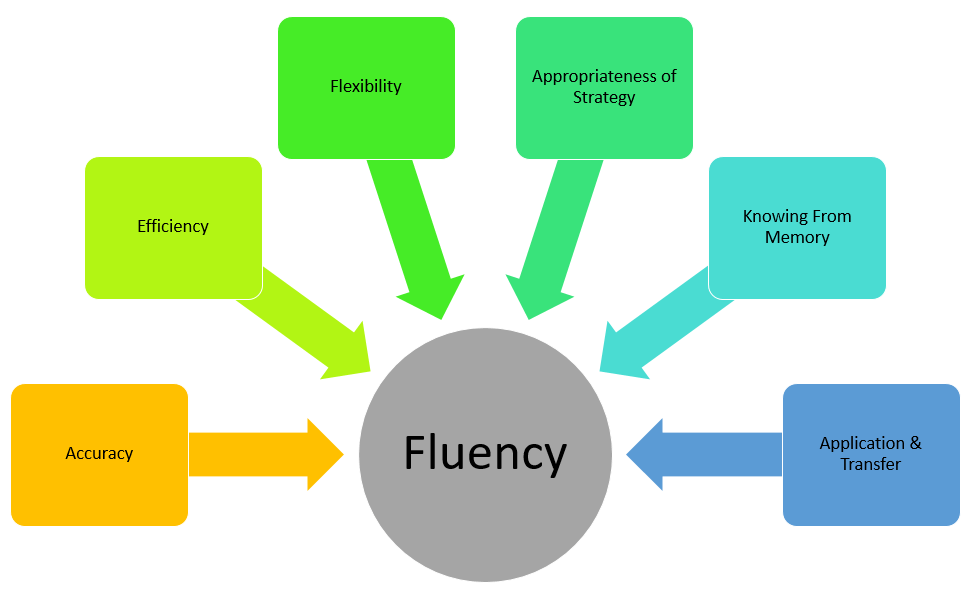
Computational fluency is the ability for people to work flexibly and fluently with numbers. While one aspect of fluency includes automaticity with facts, the automaticity develops out of a deep understanding of how numbers work (number sense) that is developed through frequent and varied experiences working with numbers. In this sense, fluency is as much about how we get the answer as it is about the answer itself.
Free resources for learning about teaching for computational fluency: While some of these resources were designed for teachers, they will also be useful for parents, who want to better understand how to support their children in becoming more fluent when working with numbers.



Building Fluency
Games, stories and rich math tasks/routines are the best way to build fluency. Fluency, unlike memorization is developed from a deep understanding of how numbers work. Unlike memorized facts, computational fluency allows students to work efficiently in any context with flexibility and confidence. The resources on this page support the development of computational fluency through activating deep thinking about how numbers work, how they go together and how they come apart.
Questions to ask when choosing resources for developing fluency:
- Does this resource/tool/activity develop understanding of how numbers work, rather than focusing on speed and accuracy?
- Does this resource/tool/activity activate thinking? (memorization activates recall, not thinking)
- Does this resource/tool/activity allow for flexibility of strategies and thinking to be practiced and acknowledged?
- Does this resource/tool/activity allow for each child to operate within their development zone (unproductive struggle = frustration; unnecessary repetition = boredom)
- Does this resource/tool/activity allow for moments of DISCOVERY and JOY as the learner makes deeper connections to how numbers work in the world?
Teachers: Always remember to preview any resources for compatibility with the technology available AND compliance with your districts curriculum and privacy requirements.
Steve Wyborney’s Multiplication Course (and activities)
Christina Tondevold:
Youcubed:
- Parent Resources
- Fluency Without Fear
- Mindset and Weeks of Inspirational Math Videos
- PolyUp (puzzle game)
Dan Finkel:
- Games
- Tiny Polka Dot and Prime Climb (Math Board Games)
- Parent Support
- Blog (many articles on developing computation)
- Curriculum (Grade levels aligned to American Common Core, be selective for BC Curriculum)
Carole Fullerton
Mathigon:
- Multiplication by Heart (designed with Dan Finkel; digital)
Berkeley Everett:
- Visual Animations of operations and information on visual math
- Math Flips (alternative to flashcards; digital and hard copy)
Jen Barker:
Janice Novakowski:
Graham Fletcher:
- Progression videos https://gfletchy.com/progression-videos/
- Building Automaticity Base 10 Cards (videos and pdf)
- Multiplication Subitizing Cards (videos and card downloads)
- digital cards
 Mathing Around